
Secure shopping

Banking and insurance
The Banking & Insurance sector – often referred to as the lifeblood of the real economy – is of vital importance in the modern credit-driven economic growth model. Among its functions are intermediation between savers and borrowers, ensuring funds are allocated efficiently; support of payment and settlement systems that facilitate trade and international economic relations; and provision of various products that mitigate risk and uncertainty. The accelerating pace of technological change, stricter regulation and shifting consumer habits are reshaping the traditional banking model and pushing the sector towards innovation-led growth.
Activities associated with Banking & Insurance are depositary and non-depositary credit intermediation and related activities, investment banking, securities brokerage, commodity contracts dealing and diverse financial investment activities. The sector also includes insurers, re-insurers and insurance brokerages, pension funds, health and welfare funds, monetary authorities, stock exchanges, and collection and credit agencies.
Turkiye is home to production sites for more than 30 of the world's top 100 automotive suppliers, reflecting its strategic role in the international automotive industry. The automotive sector has consistently driven Turkiye's industrial expansion ...
View more details
The CEE pharmaceutical and healthcare sector demonstrates remarkable resilience amid regional economic pressures, with each country adopting distinct strategies to address similar challenges. The overall market continues its growth trajectory, though ...
View more details
The retail sector plays an important role in Poland's economy, accounting for 13% of the country's GDP and 10.2% of total employment in 2024. Additionally, the sector represented 12% of the country's total FDI inflow in 2023. The GVA of trade, ...
View more details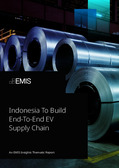
Southeast Asia is a subregion of the Asian continent which comprises eleven countries, notably Brunei Darussalam, Cambodia, Indonesia, Laos, Malaysia, Myanmar, the Philippines, Singapore, Thailand, Timor Leste, and Vietnam ...
View more details
India's metal processing sector is a critical pillar of the country's industrial ecosystem, enabling growth across infrastructure, energy, mobility, manufacturing, and consumer goods. It encompasses a broad spectrum of activities, from the extraction ...
View more details
Poland's healthcare and pharmaceutical sector is dynamic and rapidly evolving, marked by innovation, resilience, and a growing global presence despite substantial challenges. The ongoing war in Ukraine, which followed the COVID-19 pandemic, has ...
View more details
China is the world's largest producer, consumer, and exporter of steel. The country's crude steel production and consumption have both ranked first in the world for 29 consecutive years, according to the China Iron and Steel Association (CISA). In ...
View more details
Colombia's GDP grew by 1.7% y/y in real terms in 2024, driven primarily by private consumption on the demand side, which increased from 0.4% in 2023 to 1.6% in 2024. This strengthening of demand has allowed for the gradual recovery of the retail ...
View more details